
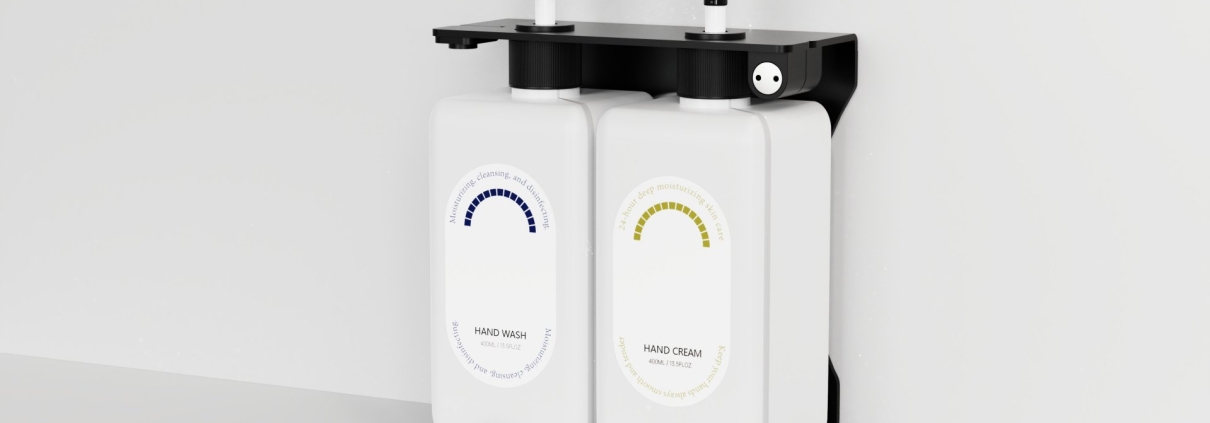
Just a few weeks ago, the outlook for the year was vibrant with possibility. Our marketing calendar was set, samples were packed, and flights were booked. We were looking forward to reconnecting with partners and showcasing our latest range of luxury hotel soap dispensers at a major trade exhibition in the Middle East.
Today, those plans sit in a folder marked “Postponed Indefinitely.” The reason isn’t a logistical hiccup or a budget cut. It is a geopolitical earthquake that has sent shockwaves through the global economy, directly impacting our seemingly stable corner of the hospitality supply industry.
The hypothetical—yet terrifyingly plausible—scenario began with a single, world-altering event: the death of Iran’s Supreme Leader, Ayatollah Ali Khamenei. In the volatile landscape of the Middle East, this was the spark that ignited the powder keg. Accusations flew, longstanding tensions with the West, particularly the United States, boiled over, and within days, a full-scale military conflict engulfed the region.
For most people, the immediate images were of airstrikes, political summits, and humanitarian concerns. But for those of us in global trade, the second, equally devastating blow landed in the narrowest of waterways: The Strait of Hormuz.
In a strategic move to cripple the global economy and leverage international pressure, Iran made good on decades of threats and effectively blocked the strait. As the choke point through which roughly a fifth of the world’s total oil consumption passes, its closure acted like a tourniquet on the heart of global energy supply. The result was instantaneous and brutal: global oil prices didn’t just spike; they skyrocketed.
This is the point where the macro world of international conflict collided with the micro world of our business—the manufacturing and distribution of hotel soap dispensers.
The Logistics of Lubrication
At first glance, a plastic soap dispenser seems a world away from a barrel of crude oil. But a closer look at our supply chain reveals a deep, uncomfortable dependency.
First, there is the obvious connection: raw materials. The vast majority of our dispensers are manufactured using ABS plastic, polypropylene, and other petroleum-based polymers. When the price of a barrel of oil triples overnight, the cost of plastic resin follows suit almost immediately. Our manufacturing partners in Asia, who were already operating on thin margins, were forced to issue emergency price increases. Quotes that were valid just a month ago became worthless pieces of paper. The cost of producing a simple wall-mounted dispenser suddenly increased by 40-60%, a margin that cannot simply be absorbed.
Second, and perhaps more critically, is transportation. Our business model relies on moving thousands of cubic meters of finished goods across oceans. The shipping industry, already grappling with its own set of post-pandemic challenges, was devastated by the fuel price surge. Container ships, which run on some of the dirtiest and cheapest fuels, saw their operating expenses explode. Ocean carriers immediately announced a slew of “emergency bunker surcharges,” adding thousands of dollars to the cost of moving a single container. The affordable, predictable shipping routes we relied on vanished, replaced by chaos and exorbitant costs.
The Hotel Industry on Ice
However, the problem isn’t just on the supply side; demand has collapsed just as dramatically.
The blockade of the Strait of Hormuz and the ensuing war didn’t just make things expensive; it made the entire region uninhabitable for business. Our target market—the vibrant hospitality sectors of Dubai, Doha, Riyadh, and beyond—ground to a halt.
-
Travel Bans and Insurance: Corporations worldwide immediately imposed travel bans. Business travel, the lifeblood of many city hotels, evaporated. Leisure travelers, spooked by the proximity of conflict and the sheer cost of getting there, cancelled their holidays. Insurance policies for events in the region became either unobtainable or prohibitively expensive.
-
Operational Costs: For the hotels that remained open, their operational costs went into orbit. Air conditioning in the desert, desalination plants for water, and kitchen operations all depend on energy. With oil at record highs, their utility bills became unsustainable.
-
Project Freezes: Most critically for us, hotel development and renovation projects were immediately frozen. The magnificent new builds and refurbishments we were hoping to supply were suddenly deemed non-essential capital expenditures. Why would an investor pour millions into a new hotel in a region that is now a war zone, with a supply chain in tatters and no guarantee of guests?
This brings us back to our cancelled trade show. That exhibition was more than just a booth and a handshake. It was the focal point of our sales pipeline. It was where we would solidify deals with procurement managers, meet with architects specifying our products for new builds, and gauge the market’s reaction to our designs. Without it, our connection to that market has been severed. Our distributors there are fighting for their own survival, not thinking about upgrading their bathroom amenities.
The Long-Term Shift for Amenities
So, what does this mean for the humble hotel soap dispenser? It forces a profound shift in value proposition.
In stable times, we sell on design, sustainability (reducing those little plastic bottles), and guest experience. In a time of crisis, the conversation changes to something much more basic: cost efficiency and resilience.
-
The Refill Economy: The value of bulk dispensers becomes even more apparent. When every cost is under the microscope, hotels will look for any way to reduce operational expenditure. The cost-per-wash of a bulk dispenser system becomes drastically cheaper than individual bottles, making the argument for installation or retention much stronger.
-
Sourcing Diversification: This crisis would serve as a brutal wake-up call for our own company. We can no longer rely on a single region for manufacturing or a single logistics corridor. We would be forced to explore nearshoring options, perhaps looking at manufacturers in Eastern Europe or Turkey to serve our Western clients, even if the unit cost is higher, to hedge against global shipping catastrophes.
-
Product Innovation: The crisis would accelerate the search for alternative materials. The volatility of petroleum-based plastics would push research into bio-resins, recycled ocean plastics, and other materials whose costs are less intrinsically linked to the price of crude.
In conclusion, the closure of the Strait of Hormuz and the ensuing war didn’t just stop our trip to a trade show. It sent a wrecking ball through the entire business ecosystem that supports the hotel industry. It exposed the fragility of globalized supply chains and turned a simple product—a soap dispenser—into a symbol of how interconnected and vulnerable our world truly is.
For now, our samples sit in boxes, a reminder of plans disrupted. But as we navigate this chaos, we are reminded that in the hospitality business, we are not just selling plastic and pumps. We are selling a small piece of comfort and normalcy. And in a world that has just been turned upside down, that comfort feels more valuable, and more fragile, than ever.