It is a peculiar feature of our hyper-connected age that a ripple in the placid pond of political discourse can, through a series of unforeseen reflections and refractions, cause a tremor in the most mundane aspects of our daily lives. The recent comments by Japan’s Internal Affairs and Communications Minister, Sanae Takaichi, regarding the potential for “certain foreign influences” to subtly reshape Japanese culture and values, have achieved precisely this. While not explicitly naming hotel amenities, her rhetoric has ignited a chain of thought, a national conversation that has, improbably yet inevitably, landed at the humble hotel soap dispenser.
To understand this connection, one must first grasp the symbolic weight Takaichi’s words carry. In a nation deeply proud of its unique cultural identity, warnings about external influence tap into a long-standing and complex dialogue about kokusaika (internationalization) versus cultural preservation. Her comments, framed around safeguarding national integrity, did not exist in a vacuum. They echoed a broader, global trend of nationalist and protectionist sentiment, where the political becomes personal, and the personal becomes commercial. In this heightened atmosphere, everyday objects cease to be mere utilities; they become texts to be read, symbols to be decoded. The hotel bathroom, a private, intimate space where one prepares to face the world, thus becomes a frontier.
For decades, the standard in Japanese hospitality, from business hotels to luxurious ryokan, has been the single-use, disposable mini bottle of shampoo, conditioner, and body wash. These items are more than mere containers for cleansers; they are tiny monuments to omotenashi—the Japanese philosophy of wholehearted, anticipatory service. They are sterile, guaranteed, and personal. The act of providing a fresh, sealed product for each guest is a tangible promise of hygiene and care. Furthermore, they are often products from well-known Japanese brands like Shiseido or Kao, embedding the experience within a trusted domestic ecosystem. The mini bottle is, in its small, plastic way, a bastion of a certain kind of Japanese order and reliability.
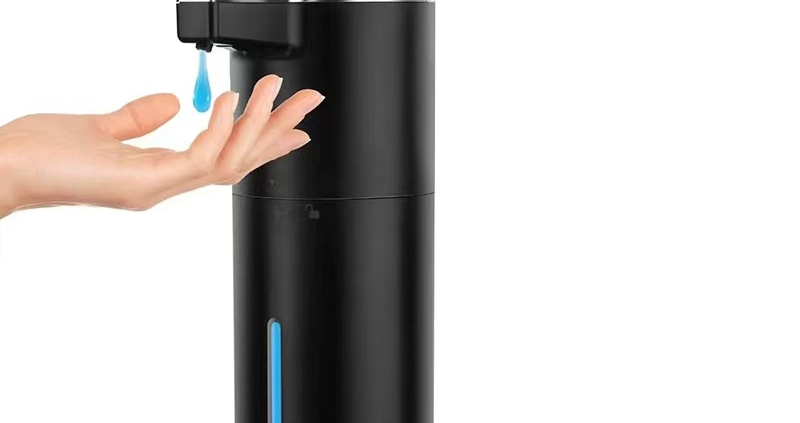
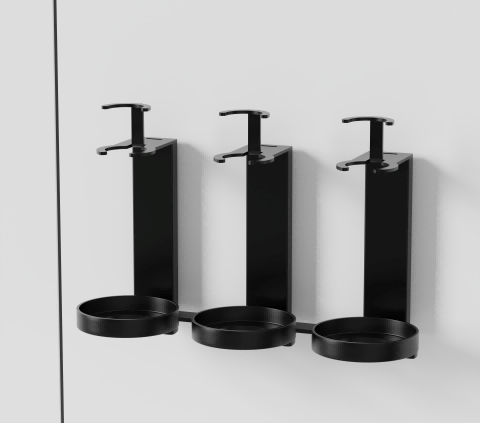
Enter the bulk soap dispenser. In the globalized playbook of hotel management, this object is a hero of sustainability and efficiency. It reduces plastic waste, a significant environmental win. It lowers operational costs, as buying liquid soap in large quantities is cheaper than countless tiny bottles. For international hotel chains with a standardized global identity—the Marriotts, the Hiltons, the Hyatts—the dispenser is a non-negotiable component of their brand uniformity. A guest in Tokyo, New York, or Dubai should, in theory, experience the same baseline of service.
However, through the lens now sharpened by Takaichi’s rhetoric, this pragmatic object transforms. The bulk dispenser is no longer just a dispenser; it becomes an agent of cultural homogenization. It represents the erosion of a distinctively Japanese form of hospitality (omotenashi) in favor of a bland, international standard. Its opaque, often wall-mounted, impersonal form stands in stark contrast to the personal, gift-like nature of the mini bottle. The question shifts from “Is this eco-friendly?” to “Is this us?” The soap inside, potentially sourced from a global supplier rather than a revered Japanese cosmetics house, becomes suspect—a literal liquid agent of foreign influence.
This is not merely a theoretical debate. The Japanese hotel industry is at a crossroads. On one hand, there is immense pressure, both from a global corporate level and from a growing environmentally-conscious consumer base (particularly younger Japanese and international tourists), to adopt more sustainable practices. The 2019 G20 summit in Osaka and the upcoming World Expo have placed Japan’s environmental commitments under a global spotlight. The dispenser is a clear, visible answer to this pressure.
On the other hand, there is a powerful, and now politically charged, domestic preference. Many older Japanese guests, in particular, view the dispenser with distrust. Is it truly clean? Who touched it last? Does the soap inside irritate my sensitive skin? This is not just paranoia; it is a deeply ingrained cultural preference for sealed, new, and personal items—a preference that aligns perfectly with the country’s famed fastidiousness about cleanliness. Takaichi’s comments give this preference a new, political vocabulary. Opposing the dispenser is no longer just about personal comfort; it can be framed as an act of cultural defense, a stand against the tidal wave of global standardization.
The impact, therefore, is not that hotels are ripping out dispensers en masse following Takaichi’s speech. The impact is more subtle and more profound. It has intensified an existing internal conflict within the industry. Hotel managers, particularly those at Japanese-owned chains, are now making a calculated decision that carries a new political subtext. To choose mini bottles is to affirm a traditional, “pure” Japanese identity, potentially appealing to a domestic market sensitive to these themes. It is a decision that can be read as aligning with a nationalist political stance.
Conversely, to choose dispensers is to align with globalism, sustainability, and modern efficiency. It is a signal to the international community and to forward-thinking locals that the hotel is progressive and environmentally responsible. This decision, however, now risks being labeled as capitulation to “foreign influence,” a betrayal of omotenashi for the cold logic of corporate cost-cutting.
In the wake of this rhetoric, we see a market responding with characteristic ingenuity. Some hotels are attempting to bridge the divide, offering “Japanese-style” dispensers—elegantly designed ceramic or wooden containers that are aesthetically aligned with wabi-sabi principles, filled with premium products from traditional Japanese brands. This is a fascinating hybrid: the form factor of global efficiency wrapped in the soul of Japanese craftsmanship. It is a compromise, but one that acknowledges the powerful symbolic war being waged.
The saga of the hotel soap dispenser in the age of Takaichi’s rhetoric is a perfect microcosm of our times. It demonstrates how abstract political ideas, when they touch upon themes of identity and sovereignty, quickly alode into the concrete reality of consumer choice and commercial strategy. The bathroom amenity becomes a canvas upon which we project our deepest anxieties about globalization, our yearning for tradition, and our fears for the planet’s future.
It reminds us that there is no neutral design, no apolitical object. Everything, from a trade treaty to a container of liquid soap, is part of a larger cultural conversation. The next time you check into a hotel in Tokyo, pause for a moment before you wash your hands. Look at that dispenser or that collection of bottles. You are not just looking at a hygiene product; you are looking at the latest front in an ongoing negotiation between a nation’s past and its future, a small, silent testament to the fact that in the modern world, politics, culture, and commerce are forever, and inextricably, lathered together.