
Plastic vs. Stainless Steel Soap Dispensers: How to Choose the Right Material for Your Clients
—A Complete Selection Guide for Hoteliers, Facility Managers, and Procurement Professionals
Introduction
When outfitting a hotel, restaurant, or commercial facility, few decisions seem as minor as choosing a soap dispenser. Yet this seemingly small choice carries significant implications for durability, hygiene, brand image, and long-term operating costs. Walk into any upscale hotel lobby, and you will notice the soap dispenser is not an afterthought—it is a deliberate design element that communicates quality. Step into a high-traffic airport restroom, and the dispenser’s ability to withstand constant use becomes paramount.
At Leekong, we manufacture both plastic and stainless steel soap dispensers, serving clients ranging from Marriott and H World Group to Hunter and The Guest Supply. This dual-production capability gives us a unique vantage point: we understand the strengths and trade-offs of each material intimately. This guide will help you navigate the selection process, matching the right material to the right scenario based on durability, aesthetics, cost, and brand positioning.
Part 1: Stainless Steel Soap Dispensers—Durability Meets Elegance
1.1 The Gold Standard for Commercial Durability
Stainless steel soap dispensers, particularly those made from 304-grade alloy, are the industry benchmark for heavy-duty performance. Unlike plastic, which can crack, fade, or warp over time, stainless steel maintains its structural integrity even in the most demanding environments . Tests show stainless steel models outlast plastic alternatives by 5 to 8 years on average .
This longevity is rooted in the material’s properties:
Corrosion Resistance: Grade 304 stainless steel contains chromium and nickel, forming a passive layer that resists rust and corrosion even in persistently humid bathroom environments . This makes it ideal for showers, pool areas, and coastal properties where moisture is constant.
Impact Resistance: Stainless steel withstands accidental knocks, cleaning cart collisions, and even vandalism attempts far better than plastic. For public restrooms in airports, train stations, or stadiums, this durability is non-negotiable.
Scratch and Stain Resistance: The material resists scratches from daily cleaning and does not absorb soap residues, maintaining a pristine appearance that plastic units lose over time .
1.2 Hygiene Advantages
In settings where sanitation is critical—hospitals, healthcare facilities, and high-end hotels—stainless steel offers hygiene benefits plastic cannot match. Its non-porous surface prevents bacterial growth and is easily cleaned with a simple wipe . Plastic surfaces, by contrast, develop micro-abrasions over time that become breeding grounds for bacteria, and they tend to absorb soap residues, leading to discoloration and odors if not cleaned regularly .
For hotel guests who equate cleanliness with quality, a stainless steel dispenser sends a powerful message: this establishment cares about hygiene at every touchpoint.
1.3 Aesthetic Appeal and Design Flexibility
Stainless steel offers a sleek, modern look that complements contemporary and classic interiors alike. The brushed finish resists fingerprints and smudges, keeping dispensers looking professional with minimal maintenance .
Beyond the classic brushed look, stainless steel supports multiple surface treatments:
| Finish | Effect | Best For |
| Brushed | Understated, scratch-resistant | High-use commercial restrooms |
| Mirror-polished | High-gloss, luxurious | Luxury hotels, spas |
| Matte Black | Bold, modern contrast | Boutique hotels, masculine interiors |
| Rose Gold/Copper | Warm, sophisticated | Boutique hotels, upscale bathrooms |
| Brushed Bronze/Gunmetal | Premium, textured High-end | Commercial spaces |
This design versatility means stainless steel soap dispensers can be tailored to match virtually any interior design scheme, from minimalist to opulent .
1.4 Customization and Low MOQ
One often-overlooked advantage of stainless steel is its suitability for low-volume customization. Unlike plastic injection molding, which requires expensive molds and high minimum order quantities (often 3,000-5,000 units), stainless steel dispensers can be produced with lower MOQs. Custom laser engraving of logos, custom finishes, and unique designs are feasible even for boutique hotel projects with relatively small orders.
At Leekong, we regularly produce custom stainless steel soap dispensers for clients with MOQs as low as 100-500 units, making this material accessible for independent hotels and smaller chains that still demand premium quality.
1.5 Considerations
Stainless steel dispensers come with a higher upfront cost compared to plastic equivalents. They are also heavier, requiring secure wall mounting to ensure safety . For facilities where budget is the primary constraint or where lightweight portability is needed, these factors may tilt the decision toward plastic.
Part 2: Plastic Soap Dispensers—Affordability and Versatility
2.1 Lightweight and Cost-Effective
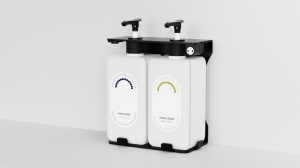
Plastic soap dispensers—typically made from ABS or polypropylene (PP)—offer a compelling value proposition for budget-conscious projects. The material is inexpensive, lightweight, and easy to install, making it the go-to choice for facilities with limited procurement budgets or where dispensers need frequent relocation .
For large-scale deployments—think chain hotels with hundreds of rooms, office buildings with dozens of restrooms, or school districts with multiple campuses—the cost savings of plastic can be significant. A plastic dispenser typically costs one-third to one-half of a comparable stainless steel unit, allowing procurement teams to allocate budget elsewhere.
2.2 Color Variety and Design Flexibility
Plastic offers a design flexibility that stainless steel cannot match. ABS plastic can be molded into virtually any shape and produced in virtually any color . This makes plastic dispensers ideal for:
lMatching specific brand color palettes
lCreating playful designs for children’s areas
lOffering seasonal or promotional color variations
lAchieving organic or unconventional shapes not feasible in metal
Metallic-effect finishes on plastic dispensers can even mimic the look of metal at a fraction of the cost , though these finishes may not be as durable over time.
2.3 Ideal for High-Volume Procurement
For large hospitality chains purchasing dispensers by the thousands, plastic is often the practical choice. The combination of low unit cost, abundant supply, and rapid production makes plastic dispensers the standard for mid-range and economy hotel segments.
Major hotel groups frequently standardize on plastic soap dispensers for guest rooms, reserving stainless steel for public areas where appearance and durability are paramount . This tiered approach optimizes costs while maintaining quality where it matters most.
2.4 Considerations
Plastic dispensers have limitations that buyers should weigh carefully:
lDurability: Plastic is more susceptible to scratches, fading from UV exposure, cracking from impact, and damage from harsh cleaning chemicals . In high-traffic environments, plastic dispensers may need replacement every 2-3 years—while a stainless steel unit could last a decade .
lHygiene: Microscopic scratches on plastic surfaces can harbor bacteria, and some plastics may absorb soap residues, leading to discoloration and odors over time .
lPerception: Plastic lacks the premium feel of stainless steel. For luxury hotels and upscale restaurants, plastic dispensers may undermine the brand image the establishment seeks to project.The Plastic That Came from War: A Story of Oil, Dispensers, and Lost Connections
lEnvironmental Impact: Plastic dispensers contribute to plastic waste, particularly if frequently replaced. This is an increasingly important consideration as hotel chains commit to ESG goals and sustainability targets .
Part 3: Head-to-Head Comparison
| Dimension | Stainless Steel | Plastic |
| Durability | ★★★★★ (8-10+ years) | ★★★☆☆ (2-4 years) |
| Hygiene | ★★★★★ Non-porous, easy to sanitize | ★★★☆☆ May harbor bacteria in scratches |
| Aesthetics | ★★★★★ Premium, professional | ★★★☆☆ Functional, can mimic metal |
| Custom Color | ★★★☆☆ Limited to finishes | ★★★★★ Unlimited colors |
| Cost | ★★☆☆☆ Higher upfront | ★★★★★ Lower upfront |
| Customization MOQ | ★★★★★ Low MOQ possible | ★★☆☆☆ High MOQ for custom molds |
| Recyclability | ★★★★★ Fully recyclable | ★★☆☆☆ Limited, downcycling |
| Best For | Luxury hotels, public spaces, healthcare | Mid-range hotels, offices, schools |
Part 4: Selection Guide by Scenario
4.1 Luxury Hotels and Resorts
Recommendation: Stainless Steel
For five-star properties and boutique hotels where brand image is paramount, stainless steel is the clear winner. The material’s premium feel, longevity, and hygiene benefits align perfectly with the elevated guest expectations in this segment . Available in multiple finishes—brushed, polished, matte black, rose gold—stainless steel dispensers can be matched to each property’s unique design language .
Guest rooms in luxury hotels: Opt for brushed stainless steel with laser-engraved hotel logos. Capacity of 300-400ml balances aesthetics with practical housekeeping needs .
Public restrooms: 304 stainless steel with 800-1000ml capacity. Sensor-activated models eliminate cross-contamination risk and project technological sophistication .
4.2 Mid-Range and Economy Hotels
Recommendation: Tiered Approach—Stainless Steel for Public Areas, Plastic for Guest Rooms
For three-star and budget hotel chains, procurement budgets are tighter. A tiered approach delivers the best value: premium stainless steel in public areas (lobby restrooms, restaurant washrooms) where guest impressions are formed, and cost-effective plastic dispensers in guest rooms where aesthetics are less critical .
Guest rooms: High-quality ABS plastic in hotel brand colors. 300-400ml capacity. Replace every 3-4 years.
Public areas: Stainless steel (brushed finish) to withstand high-frequency use and project quality.
4.3 Restaurants and Cafés
Recommendation: Depends on Segment
Fine dining and upscale restaurants: Stainless steel. The dispenser should reflect the restaurant’s attention to detail and quality.
Fast-casual and quick-service chains: Plastic. Lightweight, available in brand colors, and cost-effective for high-volume procurement. Manual plastic dispensers are particularly cost-efficient for these settings .
4.4 Healthcare Facilities
Recommendation: Stainless Steel
Hospitals, clinics, and assisted living facilities require the highest hygiene standards. Stainless steel’s non-porous surface and easy sanitization make it the only appropriate choice for these germ-sensitive environments . Sensor-activated models are strongly recommended to eliminate touchpoints.
4.5 Offices and Corporate Buildings
Recommendation: Both Options Viable
- Executive floors and reception areas:Stainless steel to project professionalism.
- Employee restrooms: Plastic dispensers (ABS) in neutral colors. Manual pump models are cost-effective and reliable for medium-traffic settings .
4.6 Schools and Educational Institutions
Recommendation: Plastic
Durability is important, but budget constraints and the need for frequent replacements make plastic the practical choice for schools. The availability of bright, fun colors is an added benefit for children’s facilities. Choose impact-resistant ABS plastic and consider manual (rather than sensor) models to minimize maintenance costs .
4.7 High-Traffic Public Spaces
Recommendation: Stainless Steel
Airports, train stations, shopping malls, and stadiums see thousands of users daily. Only stainless steel can withstand this level of wear and tear . The material’s resistance to vandalism and corrosion in these challenging environments makes it the default choice. Sensor-activated, large-capacity (1000ml+) models are recommended.
Part 5: Leekong’s Dual-Production Advantage
At Leekong, we believe the best recommendation is one that matches your specific needs—not one that pushes a single product line. That is why we maintain full production capabilities for both stainless steel and plastic soap dispensers.
Our stainless steel line serves clients requiring premium quality, durability, and design sophistication. We offer multiple finishes, custom laser engraving, and low MOQs that make custom stainless steel accessible to boutique hotels and independent projects.
Our plastic line delivers cost-effective solutions for large-scale deployments. We offer a wide range of colors, custom branding via silk-screening or UV transfer, and the production capacity to fulfill large-volume orders.
Our partnership with Marriott, H World Group, Hunter, and The Guest Supply reflects our ability to meet the rigorous quality standards of global hospitality leaders across both material types. Whether you are outfitting a five-star resort or a budget hotel chain, we have the expertise and production capability to deliver.
Our Commitment
Design support: From initial concept to 3D modeling and prototyping
Customization: Logo application, custom colors, unique finishes, tailored packaging
Quality assurance: ISO 9001-certified production with rigorous quality control
Global compliance: CE, RoHS, and FDA-compliant materials
Flexible MOQs: From small boutique runs to large-scale chain procurement
Conclusion
The choice between plastic and stainless steel soap dispensers is not about which is “better”—it is about which is right for your specific project. Stainless steel excels in premium environments where durability, hygiene, and brand image are paramount. Plastic offers affordability, color variety, and efficiency for large-scale deployments.
By evaluating your project’s usage frequency, budget, and brand positioning, you can make a confident selection. And with Leekong’s dual-production capability, you have a partner who can deliver whichever solution you choose—or both.
Ready to select the perfect soap dispenser for your project? Contact Leekong to discuss your requirements. Our team will help you weigh the options and find the ideal material for your specific needs.