
The Rise of Wellness Hotels: When Accommodation Becomes Healing
A New Priority for Modern Travelers
According to the “China Health Tourism Development Report,” over 70% of urban white-collar workers now prioritize physical and mental well-being when choosing travel destinations. They willingly pay 30%-50% more for high-quality healing experiences compared to standard hotels. Wellness hotels have seized upon this consumer trend. They are evolving from traditional “accommodation providers” into “physical and mental restoration sanctuaries.”

The Shift from Sightseeing to Healing
When fast-paced urban life brings overwhelming stress and fatigue, “health anxiety” becomes a collective pain point for modern society. People’s pursuit of healthy lifestyles grows increasingly urgent.
The meaning of travel has quietly shifted. It has moved from “sightseeing check-ins” to “physical and mental healing.” Wellness tourism—an emerging travel format integrating health preservation with leisure vacation—is breaking through niche circles. It is becoming a new essential in the cultural tourism consumption market.
Hotels serve as core carriers within the tourism industry chain. Through their deep integration with wellness tourism, they are undergoing a profound transformation. They are unlocking a new lifestyle where “staying means healing.”
 https://www.chinasoapdispenser.com/wp-admin/post.php?post=4901&action=edit
The Traditional Hotel Industry’s Predicament
The traditional hotel industry finds itself in a predicament. In 2024, the total number of hotel rooms in China exceeded 23 million. Yet average occupancy rates decreased by 3.2% year-on-year. Revenue per available room declined for six consecutive quarters.
The rise of healing-oriented accommodations fundamentally represents a value reconstruction within the hotel industry. It shifts from providing standardized lodging services to delivering personalized “physical and mental health solutions.”

Impressive Market Growth
Market enthusiasm and data confirm the enormous development potential of wellness hotels. According to industry estimates, China’s wellness hotel market reached approximately 110 billion yuan in 2024.
With residents’ continuously improving health awareness, ongoing consumption upgrades, and rapid expansion of the wellness tourism market, this figure continues to climb steadily. Projections suggest the market size will exceed 280 billion yuan by 2030. This would achieve a compound annual growth rate of 18.5%.
This growth rate far surpasses the traditional hotel industry average. It reflects contemporary society’s strong demand for integrated “health + vacation” experiences. Wellness hotels are gradually evolving from an industry “blue ocean” into the core growth pole of the cultural tourism and wellness industry. They are attracting attention from both capital and markets.
What Makes Wellness Tourism Different
Unlike traditional tourism focused on “viewing scenery,” wellness tourism centers on “nourishing body and mind, restoring health.” It pursues immersive experiences that allow people to “slow down and rejuvenate.”
Wellness hotels serve as the core carriers of this experience revolution. They transcend the simplistic logic of traditional hotels that “only provide accommodation.” Instead, they deeply integrate lodging services with diverse elements such as health management, wellness leisure, and professional healing.
By breaking the boundaries between “tourism” and “health preservation,” they enable travelers to complete health maintenance during their journey. Guests achieve physical and mental revitalization while comfortably lodged. This truly creates an ideal healing space that is “livable, recuperative, and relaxing.” It has become an indispensable component of wellness tourism.

Creating the Ideal Healing Space: The Leekong Soap Dispenser Integration
Walking into a premium wellness hotel, you’ll notice that every detail has been thoughtfully designed. Each element serves the guest’s healing journey.
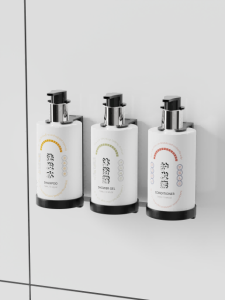
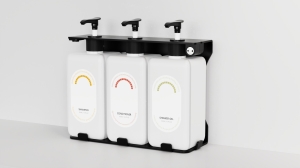
This commitment to holistic wellness extends even to the most intimate moments of daily routine. The Leekong soap dispenser, with its sleek minimalist design and precision-engineered mechanism, transforms the simple act of handwashing into a mindful ritual.
Its touch-free operation promotes hygiene while eliminating unnecessary physical contact. Guests can remain in their state of relaxation without disruption. The adjustable foam settings create the perfect consistency of soap—neither too watery nor too thick. A mundane task becomes a sensorial experience that aligns perfectly with the hotel’s philosophy of “finding wellness in every moment.”
Science-Based Wellness Services
What differentiated wellness services can a quality wellness hotel provide? How can they make “vacation equals wellness” a reality?
Unlike traditional hotels that simply add wellness facilities, professional wellness hotels center on “science, precision, and personalization.” Leveraging advanced health management equipment and professional service teams, they construct comprehensive health service systems. These systems cover the entire cycle of “detection—intervention—rehabilitation—regulation.” They precisely match the health needs of different populations.
Health Testing and Physical Intervention
In terms of health testing and physical intervention, wellness hotels introduce professional health management equipment. They provide guests with comprehensive health screening and targeted interventions.
Full-body health risk assessment serves as the core foundational service. It rapidly completes whole-body health testing. It accurately evaluates key indicators of various tissues and organs. It captures potential health risks early. And it provides scientific evidence for personalized wellness programs.
For identified health issues, complementary functional medicine physical intervention services help the body quickly adapt to environmental changes. These achieve non-invasive, safe health regulation.

Specialized Services for Different Needs
Addressing the specific needs of different populations, wellness hotels can create specialized wellness services.
For individuals troubled by memory decline and reduced cognitive abilities, cognitive dysfunction screening and memory impairment training services are available. Through professional assessment tools, cognitive dysfunction risks are precisely identified. Scientific training methods help improve memory and enhance cognitive function. These services particularly suit middle-aged and elderly groups, plus urban populations under long-term high pressure and significant mental exertion.
Simultaneously, for issues like poor blood circulation and red blood cell aggregation, specialized testing and rehabilitation services strengthen cardiovascular health defenses.
Sleep: The Cornerstone of Health
Sleep, as the “cornerstone” of health, represents another key service area for wellness hotels. Facing widespread modern problems—difficulty falling asleep, light sleep, and excessive dreaming—wellness hotels introduce functional medicine sleep intervention services. These help guests improve sleep quality and break free from sleep troubles.
Quality sleep, combined with scientific dietary regulation and leisure relaxation, ensures that during their stay, guests not only alleviate travel fatigue but also achieve deep physical and mental restoration. This truly realizes the dual effects of “body nourishment + mind cultivation.”

A New Lifestyle Emerges
Today, the integration of wellness tourism and hotels has transcended the superficial combination of “accommodation + wellness.” It has become an expression of an entirely new lifestyle.
When guests step into a wellness hotel, they experience not only a comfortable lodging environment but also a “health-centered” life philosophy. Here, vacation is no longer a brief escape but an immersive health “recharge.” Accommodation is no longer simple rest but a professional physical and mental healing journey.
The Future of Wellness Hotels
As market demand continues to escalate, wellness hotels are progressing toward greater specialization. They pursue finer segmentation and increased personalization.
They continuously integrate quality health resources. They upgrade service systems. They innovate experience models. All this achieves deep symbiosis between “wellness” and “accommodation.”
When wellness tourism meets hotels, it not only injects new vitality into the tourism industry. It also provides modern individuals with a novel choice that balances leisure with health. Every journey transforms into a practice of pursuing wellness and well-being. Healthy living becomes accessible during every stay.