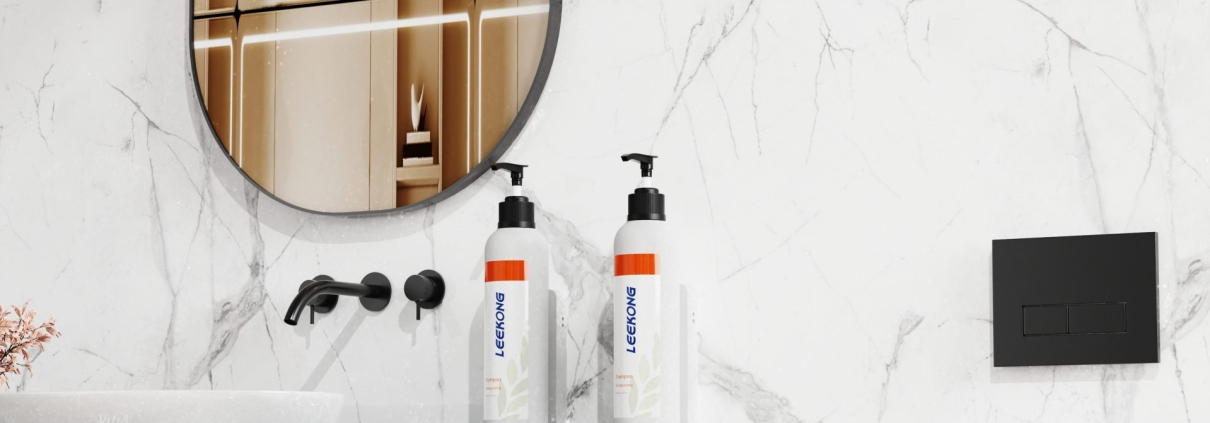
Custom Soap Dispensers Boost Brand Image
——A Strategic Upgrade from Functional Accessory to Brand Touchpoint
Introduction
In today’s fiercely competitive brand landscape, every touchpoint where consumers interact with your brand conveys your value proposition. However, there is one corner that brand owners often overlook—the soap dispenser in the restroom.
Most people view soap dispensers as purely functional tools, a “just need it to work” accessory. But for brands that truly understand brand management, custom soap dispensers are becoming a powerful medium for strengthening brand image, enhancing user experience, and communicating brand values.
Data shows that over 70% of consumers believe restroom quality directly impacts their overall impression of a hotel or restaurant. As the only device in the restroom that interacts with every guest, the soap dispenser’s design, texture, and functionality—all subtly shape the brand’s image.
This article will dive deep into the brand value of custom soap dispensers, covering multiple dimensions from visual identity and user experience to emotional connection and sustainable development, revealing how a “small soap dispenser” can achieve a “big brand image upgrade.”
Part 1: From “Invisible” to “Visible”—The Changing Role of the Soap Dispenser
1.1 An Overlooked Brand Touchpoint
In traditional brand thinking, brand building often focuses on “visible” areas: logo design, product packaging, advertising, social media operation. Restroom equipment has long been excluded from brand planning.
This mindset is being overturn.
SC Johnson Professional clearly states in its latest brand communication: “Custom dispensers can enhance the ambiance of a space, making it feel more personalized and thoughtful. A high-quality soap dispenser adds a touch of elegance and shows your commitment to cleanliness and style. ”
This insight reveals a key point: the soap dispenser is no longer just a functional “tool” but an integral part of the brand experience. When a guest walks into your hotel’s public restroom or uses your restaurant’s sink, the dispenser’s design, material, and dispensing experience all tell the guest: this brand cares about details, values quality, and cares about users.
1.2 The MaisoNovo Lesson: How One Soap Dispenser Built a Brand
In 2020, an Airbnb host named Louisa Li launched a stylishly designed soap dispenser on Amazon. She didn’t anticipate that this product would quickly become a hit, eventually giving birth to a multi-million dollar brand—MaisoNovo.
“Most of the products I found on the market felt like they belonged in a motel,” Li recalled, “So I decided to design my own.” Today, MaisoNovo has grown from a one-person project into a top home furnishings brand on Amazon, with a mission to make home organization “stylish, functional, and eco-friendly.”
The lesson for brand owners: the soap dispenser category itself has huge market potential. A well-designed, high-quality soap dispenser can not only enhance your brand image but could itself become a star product in your product line.
Part 2: Five Ways Custom Soap Dispensers Enhance Brand Image
2.1 Path 1: Visual Consistency—Make Your Brand Symbols Ubiquitous
A strong brand maintains visual consistency across every consumer touch point. From website to social media, from product packaging to store design—brand colors, logo, and design language must be penetrate throughout.
Custom soap dispensers are an indispensable part of this system.
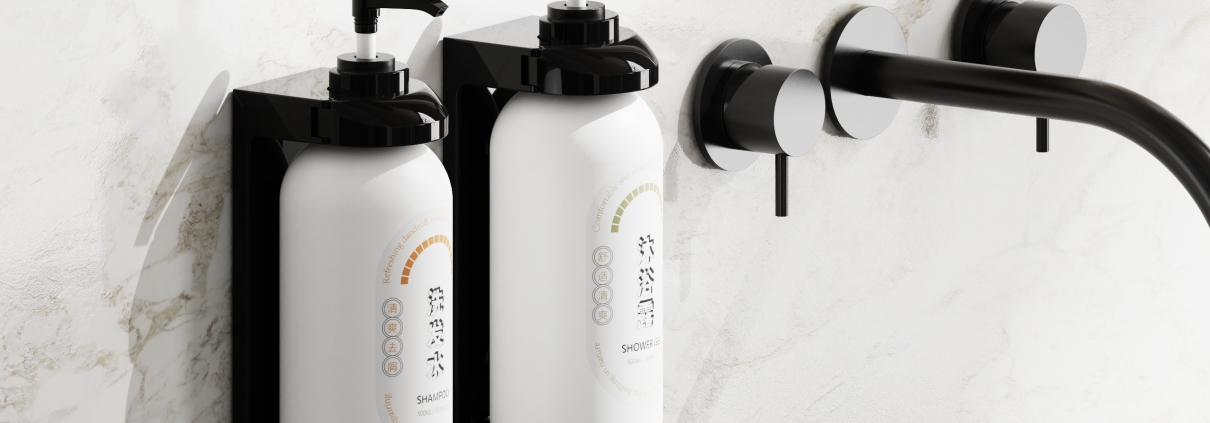
Ways to Add Your Logo
| Customization Method | Visual Effect | Application | Cost Level |
| Screen Printing | Flat, clear | Plastic dispensers, glass bottles | Low |
| UV Transfer | Vibrant colors, durable | Plastic dispensers | Medium |
| Laser Engraving | Permanent, premium feel | Stainless steel dispensers | Medium-High |
| Injection Molding | Integrated with product | Plastic dispensers (large quantity) | High |
| Metal Badge Inlay | Three-dimensional, luxurious | High-end custom projects | High |
“Custom dispensers prominently display your logo or design, consistently conveying your brand message to visitors. “——This is not just a decoration but a 24/7 brand exposure window.
A five-star hotel purchasing manager once shared that after they laser-engraved their brand logo on stainless steel dispensers, they often saw guests posting restroom photos on social media with the dispenser “accidentally” in the frame. This kind of spontaneous brand exposure is something no advertisement can replace.
Brand Color Extension
Beyond logos, brand color application is equally important. Quality soap dispenser manufacturers offer a wide range of color customization options. For example, glass soap dispenser manufacturer Roetell not only offers existing color options but also “produces other colors according to your design. Our professional glass craftsmen will mix colors according to the Pantone Color Guide to create your unique shade.”
This means your brand colors can be fully extended to restroom soap dispensers—from space gray to champagne gold, from Tiffany blue to Hermès orange, almost any color is achievable.
2.2 Path 2: Experience Upgrade—Make Every Hand Wash a Brand Experience
Brand image ultimately rests on user experience. A well-designed soap dispenser significantly improves user experience, thereby enhancing brand Pleasure quotient.
Touchless: The Perfect Combination of Hygiene and Convenience
In the post-pandemic era, consumer awareness of “touchless” has dramatically increased. Touchless soap dispensers dispense soap without touching any surface, effectively reducing cross-infection risk. This “tech-savvy” experience itself conveys the brand’s forward-thinking and commitment to user health.
As Vangeni emphasizes in its H5 Smart Hand Washer product description: “Touchless experience serves as a tech accessory to decorate homes and workplaces. ”
Precision Dispensing: Reduce Waste, Improve Satisfaction
Quality soap dispensers precisely control the amount dispensed, avoiding too much or too little. This not only reduces soap waste but also makes users feel the brand’s “attentiveness.”
View Window: Symbol of Professionalism and Transparency
SC Johnson Professional’s QuickView™ series dispensers feature a transparent design where “transparent sides visible from any angle or distance enable cleaning staff to quickly and accurately check soap levels. ” This design not only improves operational efficiency but also conveys a message to users: this brand values transparency and has nothing to hide.
2.3 Path 3: Material Texture—Let “Visible Quality” Speak
Material is the most intuitive reflection of product quality. Consumers may not understand injection molding processes, but they can immediately tell if plastic gloss is premium or if stainless steel surface treatment is refined.
Plastic Dispensers: Quality in the Details
High-quality plastic dispensers use ABS or food-grade PP material with a smooth, even surface that resists scratches or discoloration. In contrast, low-end products may have color differences, burrs, or rough texture. These detail differences directly affect users’ perception of brand quality.
Stainless Steel Dispensers: Synonymous with Premium Feel
304 stainless steel is the top choice for the hotel industry. Its advantages include:
Extreme durability: Impact-resistant, corrosion-resistant, stays like new for years
Easy cleaning: Wipes clean easily, low maintenance cost
Premium feel: Brushed or mirror finishes convey a professional, high-end brand image
Vangeni’s H5 Smart Hand Washer uses a “full metal body” design with “higher precision than mobile phone manufacturing standards” to create an electronics-grade premium feel.
Glass Dispensers: Balance of Elegance and Environmental Protection
Glass material’s biggest advantage is its “delicate, elegant appearance that enhances product aesthetic sense. ” Also, glass “does not leach, does not contaminate or alter the formula of its contents, ” ensuring soap quality.
Roetell, as a professional glass container manufacturer, offers various surface finishing options including custom colors, decals, labels, and more to help brands create unique glass soap dispensers.
2.4 Path 4: Emotional Connection—Let Dispensers Tell Brand Stories
The highest level of brand building is creating emotional connections with consumers. Custom soap dispensers can serve as a medium for telling brand stories.
Vehicle for Environmental Stories
For brands focused on sustainability, soap dispensers are an excellent vehicle for conveying environmental protection commitments. Refillable designs, recycled materials, solid soap tablet systems—these environmental protection features can be showcased on the dispenser itself.
Some hotels print messages like “We saved 15,000 plastic bottles last year” on dispenser sides, visualizing their environmental protection achievements and making guests feel the brand’s sincerity.
Symbol of Care
Custom soap dispensers can also convey the brand’s attention to detail and care for users. As Lickon states in its supplier philosophy: “We deeply understand that any appearance flaw or unstable dispensing volume can directly affect your end customers’ experience. ”
A thoughtfully designed soap dispenser tells users: this brand cares about every detail, including corners you might not particularly notice.
MaisoNovo’s Brand Philosophy
Louisa Li’s description of her brand MaisoNovo: “MaisoNovo is about more than just organization—it’s about creating a Zen space where you feel safe, settled, and surrounded by care. ”
If MaisoNovo’s soap dispenser can help users create such a spatial feeling, then any brand’s dispenser can similarly serve as a medium for conveying brand values.
2.5 Path 5: Differentiation—Stand Out in a Crowded Market
In highly competitive industries like hospitality, food service, and retail, homogenization is common. When most competitors use standardized soap dispensers, custom products become a tool for differentiation.
SC Johnson Professional notes: “Unique branding opportunities, such as custom dispensers, can help your business stand out in a crowded industry. ”
This differentiation appears on multiple levels:
Visual Differentiation
When competitors all use standard white plastic dispensers, your champagne gold stainless steel custom dispenser immediately stands out. This visual impact itself is brand promotion.
Functional Differentiation
Touchless dispensers offer a more hygienic experience than manual ones. If your competitors are still using manual dispensers, touchless ones become your competitive advantage.
Philosophical Differentiation
Conveying brand values through the dispenser’s environmental protection design creates a sharp contrast with competitors still using disposable plastic bottles.
Lickon emphasizes in describing its custom service: “When you choose Lickon, you’re choosing more than a soap dispenser manufacturer—you’re choosing an efficient collaboration system built on ‘stability.’ “——This commitment to stability itself is a position of differentiation.
Part 3: Operational and Business Value of Custom Soap Dispensers
3.1 Operational Efficiency Improvement
Custom soap dispensers not only enhance brand image but also deliver tangible operational benefits.
Reduce Refill Frequency, Lower Labor Costs
Large-capacity custom dispensers (800-1200ml) significantly reduce refill frequency. For hotels or office buildings with hundreds restrooms, this means cleaning staff can devote time to more valuable work.
View Window Boosts Efficiency
Dispensers with view windows enable staff to “quickly and accurately check soap levels, ” avoiding unnecessary “open to check” actions and preventing customer complaints from empty dispensers.
Unified Refill System
When an entire facility uses a consistent dispenser system and refill packaging, purchasing, inventory management, and refill processes are all simplified, reducing operational complexity.
3.2 Cost Control Optimization
Reduce Soap Waste
Precision dispensing technology can limit single time dispensing volume to 2-3ml, compared to optional dispensing with manual pumps, saving 20-30% in soap consumption.
Lower Packaging Costs
Switching from disposable bottles to refillable dispensers can reduce packaging costs by 70-80%. For hotels or chain brands with large annual purchases, these savings are substantial.
Stable Supply Chain
Stable supplier relationships deliver “transparent, reasonable prices, and during raw material market fluctuations, collaborate with customers to find solutions rather than simply raising prices. ” This stability is crucial for cost control.
3.3 ESG Goal Achievement
More and more companies are making ESG (Environmental, Social, Governance) a strategic priority. Custom refillable dispensers directly contribute to this goal:
Reduce plastic waste: Compared to disposable bottles, refillable systems reduce plastic usage by an average of 56-77%
Lower carbon footprint: Bulk soap packaging has smaller transport volume and weight, reducing logistics carbon emissions
Compliance assurance: Proactively adopting refillable systems evade increasingly strict single-use plastic bans
These environmental protection achievements can be included in corporate ESG reports, demonstrating environmental commitment to investors and consumers.
Part 4: Practical Guide to Custom Soap Dispensers for Brand Owners
4.1 Clarify Your Brand Needs
Before contacting manufacturers, brand owners should consider:
| Question | Your Answer |
| What brand message do you want to convey through dispensers? | Premium/Eco-friendly/Tech/Simple? |
| What are the target usage scenarios? | Hotel guest rooms/Public restrooms/Restaurants/Offices? |
| What is expected usage frequency? | High-frequency areas need touchless, large capacity |
| What is your budget range? | This determines material and customization depth |
| What is estimated purchase quantity? | Affects MOQ and unit price |
4.2 Choose Appropriate Customization Depth
| Customization Level | Content | Suitable Brands |
| Basic customization | Logo printing, color options | Small/medium brands, first-time attempt |
| Deep customization | Exclusive colors, special finishes, custom packaging | Medium/large brands, chain businesses |
| Full ODM | New appearance design, mold development | Large brands seeking absolute differentiation |
4.3 Choose a Reliable ODM Partner
When selecting an ODM partner for custom soap dispensers, evaluate these key indicators:
Technical capability: Does it have a design team? Can it provide 3D drawings and samples?
Production capability: Factory scale, equipment level, quality control system?
Customization experience: Has it served similar brands before?
Supply chain stability: Does it have stable raw material supply and on-time delivery?
As Lickon emphasizes: “A stable, long-term supplier for companies focused on custom soap dispensers is not simply a ‘vendor to buy from’ but a strategic partner moving forward together. ”
Choosing an ODM partner is not just choosing a supplier—it’s choosing a strategic partner who understands your brand needs and grows with you.
Conclusion
Custom soap dispensers—seemingly a small detail—carry grand brand-building narratives.
They extend brand vision—bringing your logo and brand colors to every restroom.
They upgrade user experience—making every hand wash a pleasant brand encounter.
They prove quality commitment—conveying “attention to detail” through high quality materials and craftsmanship.
They carry brand stories—telling your environmental protection stance, design philosophy, and care.
They are tools for differentiation—standing out in a sea of standardized products.
For operators of commercial spaces like hotels, restaurants, office buildings, and retail stores, custom soap dispensers are no longer a “nice-to-have” but a “must-have” for brand building.
Leekong specializes in ODM/OEM custom soap dispenser services, dedicated to helping brand owners turn the “small soap dispenser” into a “powerful brand touchpoint.” Whether you want to rebrand existing products from our library or develop completely unique custom products, we provide professional one-stop solutions.
Contact us, tell us your brand story, and we’ll help you tell it with a custom soap dispenser.