
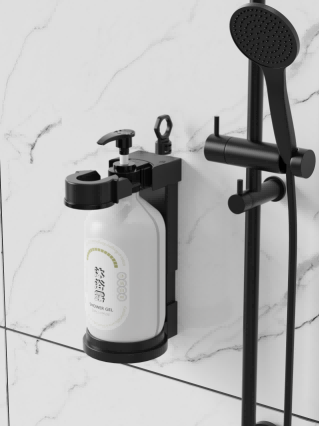
Eco-Friendly Soap Dispenser: Cut Plastic Waste
The Environmental Transition: From Single-Use Bottles to Rechargeable Systems
Introduction
In today’s world, where global environmental awareness is steadily growing, plastic pollution has become one of the most pressing environmental challenges facing humanity. According to data from the United Nations Environment Programme, approximately 400 million tons of plastic waste are generated worldwide each year, with less than 10% being recycled. Among this plastic
waste, single-use packaging bottles account for a significant proportion—particularly in the personal care product sector within public venues such as hotels, restaurants, and office buildings.
As a company dedicated to the research, development, and manufacturing of soap dispensers, Leekong fully recognizes the environmental impact of traditional single-use plastic soap bottles. This article delves into the plastic issues associated with conventional soap packaging, examines how refillable soap dispensers serve as an effective solution, and offers a comprehensive guide to transitioning from traditional practices toward sustainability, incorporating the latest industry trends.
Part One: The Severe Reality of the Plastic Problem
1.1 The staggering scale of single-use plastic bottles
Imagine this: A hotel with 200 guest rooms provides a 50 ml bottle of shampoo, shower gel, and conditioner for each room upon check-in. Within just one month, this results in hundreds of plastic bottle waste items. Over a year, this figure easily exceeds 10,000 bottles.
There are millions of such hotels around the world.
Industry data shows that Gilchrist & Soames alone reduced plastic usage by over 2,285,254 pounds—equivalent to eliminating 185,815,247 single-use vials—in fiscal year 2025 by guiding customers to switch from disposable bottles to soap dispensers. These figures represent one brand’s achievement; the global impact is staggering.
1.2 The Life Cycle Dilemma of Plastics
The issue of single-use plastic bottles extends far beyond the simple practice of ‘throwing them away after use.’ Their environmental footprint spans the entire lifecycle, from production to disposal:
-Production stage: The manufacturing of plastic bottles consumes substantial amounts of fossil fuels, with approximately 6 kilograms of carbon dioxide emitted per kilogram of plastic produced.
-Usage phase: Small-capacity packaging results in a higher packaging-to-product ratio and reduced transportation efficiency.
-Disposal phase: The vast majority of plastic bottles ultimately end up in landfills or the ocean, where they take hundreds of years to degrade.
1.3 Why “recyclable” isn’t enough
Many people ask, “Can’t plastic bottles be recycled?” The crux of the matter is that being recyclable does not equate to being actually recycled. In reality, due to inadequate recycling infrastructure, higher recycling costs than producing new materials, and the inherent degradation of recycled plastics, the vast majority of single-use plastic bottles never enter the recycling cycle. Most end up in landfills or in the oceans.
Part II: The Add-on Soap Maker – The Core of the Solution
2.1 From disposable to replenishable: a magnitude leap
The switching to a supplementary soap solution generator represents the direct solution to the aforementioned issues.
According to industry practices, replacing disposable vials with soap dispensers can reduce plastic usage by an average of 56% to 77%. The rationale behind this figure is straightforward: a durable soap dispenser housing can last for several years, during which only large-packaged soap solution needs to be replenished.
Compare:
| Option | Annual Plastic Consumption (Estimate) | Packaging Replacement Frequency |
| Disposable vials (for hotels with 200 guest rooms) | Approximately 500–800 kg | Replaced daily/for each guest |
| Replenishable soap solution tank (same capacity) | Approximately 150–200 kg | Replenish every 2–4 weeks |
2.2 Selection of supplementation methods: Which is more environmentally friendly?
Not all “supplementary” systems are equally environmentally friendly. The environmental benefits vary significantly depending on the specific supplementation method employed.
Method 1: Pouch Refill
This is currently the most common solution. Compared to rigid plastic bottles, bag packaging reduces plastic consumption by approximately 70–80%, while also featuring smaller transportation volume and lower carbon emissions. However, bag packaging typically consists of multi-layer composite materials, making recycling more challenging.
Method 2: Reusable bottles and containers
The soap solution is dispensed using recyclable rigid containers (such as PET bottles or HDPE barrels), which are returned to the supplier for cleaning and reuse after use. This approach closely resembles a “closed-loop” system, offering optimal environmental benefits.
Method 3: Bulk Supplement Station
In several pioneering initiatives, self-service refilling machines similar to those at Mr.Turtle have been introduced—consumers bring their own containers for bulk refilling, achieving zero packaging waste. This model is being adopted in supermarkets and laundromats across the United States, with over 10 machines currently installed. These machines refuel more than 3,000 ounces of cleaning solution weekly, eliminating approximately 20 pounds of plastic waste each week.
2.3 Enhancing Effect of the Sensory Soap Dispenser
The integration of the supplementary system with the inductive soap solution generator further enhances environmental benefits. The advantages of the inductive soap solution generator include:
–Precise liquid dispensing: Prevents excessive dispensing caused by manual pressing, thereby reducing soap waste.
–Intelligent control: The sensor integrated into the Notty soap dispenser detects the size difference between adult and child hands, automatically adjusting the liquid output volume.
–Low-energy design: Many modern inductive soap dispensers use USB-C rechargeable batteries, with some models automatically switching to standby mode after being idle for over 30 minutes to conserve energy.
Studies indicate that precision liquid dispensing technology can reduce the actual consumption of soap solution by 20–30%, meaning that the same volume of replenishment solution can be used for a longer duration, thereby further decreasing packaging requirements and logistics-related carbon emissions.
Part III: Circular Economy and Innovation in Sustainable Materials
3.1 From “Linear” to “Cyclic”
The traditional “produce-use-dispose” model is unsustainable. The concept of a circular economy holds that waste itself is a resource.
In the soap dispenser industry, this concept is becoming a reality. Take the PureLine EcoBlack series launched by CWS Hygiene as an example: these dispensers are made from up to 98% post-consumer recycled plastic sourced from discarded electronic devices such as keyboards and computer casings. The company clearly articulates its design philosophy: “Made from what was. Designed for what’s next.”
3.2 Innovations Beyond Plastic Recycling
In addition to recycling plastics, the industry is exploring a wider range of sustainable materials:
Applications of construction waste composite materials:
The 2026 Red Dot Design Award-winning “WASH” soap dispenser employs an innovative composite material—containing at least 70% waste incineration bottom ash (IBA). This material resembles ceramic in appearance yet boasts impact resistance comparable to plastic, achieving genuine waste resource utilization.
3.3 Recyclable Consumables: Beyond Hardware
A truly sustainable soap-making system requires a dual recycling process for both hardware and consumables.
The EcoBlack series from CWS features not only a soap dispenser casing made from recycled plastic, but also its accompanying consumables are designed for circular use.
–Foam soap solution: Certified with Cradle to Cradle®
–Orange Peel Hand Cream: Utilizing recycled orange peel for innovative application
Cotton towel roll: Reusable
–Recycled paper: derived from recycled cardboard boxes
These consumables also bear the EU Ecolabel, Forest Stewardship Council (FSC) certification, and Oeko-Tex certification, ensuring environmental compliance throughout the entire lifecycle—from production to disposal.
Part Ⅳ: Breaking the Trap of the Closed System of “Brand Lock-in”
4.1 Hidden Costs of Closed Systems
In traditional business models, many soap maker manufacturers adopt a strategy of “free machine delivery with profit generation through consumables sales.” Under this model, the soap maker itself may be provided free of charge, but users are compelled to purchase exclusive soap refill packs from the brand—typically priced significantly higher than market rates.
As Wuoma noted during its product launch: “Under this model, each soap dispenser could cost customers hundreds of euros over several years. In large buildings, this translates to additional expenditures of thousands of euros over the same period.”
4.2 Advantages of Open Systems
The open system that breaks down “brand lock-in” is becoming the new industry standard. Key features of such systems include:
–Universal Refill Bottle: Users may purchase soap liquid of any brand for refilling.
–Compatible with multiple containers: Can be filled with the built-in container or commonly available reusable refill packs available on the market.
–Transparent pricing: Hardware is sold at its actual value, giving users genuine freedom of choice
Woma’s Gassat soap dispenser exemplifies this philosophy. The company explicitly states: “We aim to provide a smarter, more sustainable, and more convenient way to use soap.”
4.3 Practical Significance for the Procuring Entity
For managers of large facilities such as hotels, office buildings, and hospitals, choosing an open system means:
- Cost-controlled:Soap solution can be purchased from the open market without brand restrictions.
- Stable supply: Operations will not be affected by supply issues of any particular brand.
- Flexible Optimization:You can flexibly switch soap brands or types based on environmental objectives and budget constraints.
- Long-term value:Hardware investments can be recouped within several years through savings on consumables.
Part V: Commercial Benefits – A Win-Win for the Environment and Economy
5.1 Support for ESG Goals
For listed companies or enterprises seeking financing, ESG (Environmental, Social, and Governance) performance is becoming increasingly crucial. Adopting sustainable soap-making systems can directly contribute to:
–Environment (E): Reduce plastic waste, lower the carbon footprint, and support the circular economy
–Social (S): Demonstrate the company’s commitment to environmental protection and enhance its brand image
–Governance (G): Establish a transparent supply chain management system
Many companies have begun specifically disclosing their achievements in reducing single-use plastics in their ESG reports. For example, Gilchrist & Soames reports the “number of pounds of plastic reduced by guiding customers to use soap dispensers” as a key environmental metric.
5.2 Brand Premium and Customer Loyalty
In an era where consumers’ environmental awareness is growing, “sustainability” itself has become a competitive advantage. A survey shows that over 70% of consumers prefer brands with environmental commitments. For service industries such as hotels and restaurants, implementing sustainable soap dispensers in restrooms allows them to convey clear environmental values to guests, thereby enhancing brand affinity and customer loyalty.
Part VI: Industry Trends and Future Outlook300ML Single 304SS Soap Dispenser
6.1 Directions for Technological Innovation
The sustainable development of the soap solution generator industry is advancing in multiple technological directions:
Internet of Things (IoT) and Smart Management:
The new-generation soap dispenser integrates IoT functionality, enabling remote monitoring of liquid levels, analysis of usage data, and automatic triggering of refilling reminders. This not only enhances operational efficiency but also allows for further optimization of refilling frequency and soap consumption through data analysis, thereby reducing waste.
Breakthrough in New Materials:
In addition to plastic recycling, new materials such as bio-based plastics, recycled marine plastics, and composite materials made from industrial waste are being adopted in soap-making equipment, offering more environmentally friendly options for product design.
Widespread adoption of solid formulations:
The solid hand sanitizing wipe/powder system represents the future direction of “zero plastic.” With technological maturation and declining costs, such systems are expected to find broader applications across various scenarios.
6.2 Policy and Regulatory Drivers
Globally, regulations restricting single-use plastics are being introduced at an accelerating pace:
The European Union has banned a variety of single-use plastic products.
Several U.S. states are advancing similar legislation.
China is also strengthening efforts to combat plastic pollution.
These policies will directly drive the transition of venues such as hotels, restaurants, and office buildings from single-use bottled soap dispensers to refillable soap dispensers. For purchasers, proactive planning enables them to mitigate future compliance risks.
Epilogue
The sustainable soap dispenser is more than just an eco-friendly concept; it represents a proven solution that delivers both environmental and economic benefits. Its value is multifaceted—ranging from reducing plastic waste and lowering operational costs to supporting ESG objectives and enhancing brand image.
For those reading this article—whether hotel managers, facility managers, or brand procurement directors—the time is ripe for transformation. The technology is ready, the cost-effectiveness is clear, and consumer expectations are well-defined. All that remains is to take action.
Leekong is committed to providing global customers with high-quality, customizable sustainable soap dispensers. Whether plastic or stainless steel, manual or sensor-operated, we offer ODM/OEM customization tailored to your specific needs. Let us join hands to create a future with less plastic and more sustainability.
Are you ready to reduce your plastic footprint? Feel free to contact us for more information about sustainable soap dispenser solutions.