2026 Hotel Amenities Surge: Procurement Strategies

—A Strategic Pivot for Hotel Procurement

Introduction

The hotel industry faced its first major shock of 2026. It stemmed from raw material markets, not demand softness or staffing shortages. Costs for hotel guest amenities have been climbing relentlessly. Factory-gate prices now change almost daily, with morning quotes often invalid by afternoon. Logistics costs are rising in parallel, and many hotel supply intermediaries are feeling the squeeze. The impact has not yet fully reached front-line hotel operations. However, sustained cost pressures will directly translate into higher procurement bills. For properties, this change is imminent.

Hotel procurement teams now stand at a crossroads. Do they continue with traditional consumable-based purchasing models, absorbing one price shock after another? Or do they rethink their procurement strategy from the ground up? This article analyzes the drivers behind the cost surge. It presents a viable path for hoteliers to regain control of their supply chains.
Part 1: The Two Main Drivers—Cotton Yarn and Petroleum

1.1 Cotton Yarn: Up Nearly 20% in Two Months

The core raw material for hotel towels, bath mats, and bed linens is cotton yarn. Prices for 32s and 40s pure cotton yarn were about USD 3400 per ton before the Spring Festival. These yarns typically account for more than 70% of linen product costs. By late March, they had surged past USD$4,000, a nearly 20% increase in just two months.

What makes the situation even more challenging is the sheer unpredictability. One linen manufacturer complained that fixed quotes. When a customer calls for a price, they must first check with the yarn supplier. By the time they call back, the price has often changed. Some distributors have received adjustment notices from upstream mills. They state: Effective immediately, all products are subject to same-day pricing. Quoted prices are valid only on the day of inquiry. A veteran distributor with over a decade of experience remarked, “In the past, price increases were like boiling a frog slowly.We feel boiling water pouring over us now.

The root cause lies in structural supply constraints. Structural supply constraints reduced Xinjiang’s cotton planting area by 5 to 7 million mu (330,000–470,000 hectares), a decline over 10%. Farmers are switching to wheat, and the resulting drop in expected cotton output has naturally driven prices higher.

1.2 Petroleum: PP Prices Jump USD$300/Ton in a Single Day

If you think switching to a polyester-cotton blend will save costs, think again—polyester is also derived from petroleum, and oil prices are rising too.

The upstream source for plastic resins is crude oil. Toothbrush handles, combs, slipper soles, shower gel bottles—these everyday hotel consumables all come from the petrochemical value chain: crude oil → naphtha → ole-fins → plastic resins, with each link adding cost. In late February, some institutions foretasted oil prices hitting $100 a barrel, triggering widespread market panic.

On March 9, PP resin (used for toothbrush handles) jumped USD$300 per ton in a single day—whereas a weekly increase of USD$30 had previously been considered substantial. PET resin (used for shower gel bottles) surged USD$243 per ton in one day, and by the end of March had accumulated a 34.8% increase month-over-month. Pure benzene spiked USD$385 per ton in a single session. According to the H1 2026 interim report of listed company Jiangnan Gaofiber, the average purchase price of polypropylene (PP) in the first half reached USD$1264.35 per ton, up 24.65% year-on-year.

In Hangji, Yangzhou—China’s largest production base for hotel daily necessities—upstream petrochemical plants began to “suspend offers” or ration sales from early March. Where a buyer could previously order 100 tons and receive 100 tons, now an order of 100 tons might only yield 20 tons, forcing them to source the rest elsewhere—only to find that other suppliers are also rationing.

Part 2: The Hotel Industry’s Dilemma—Costs Are Rising, But Room Rates Cannot Follow Suit

The impact of the raw material surge is hitting every category:

Linens: Towels, bath mats, and bed sheets are directly affected, with pure cotton yarn rising nearly 20% in two months.

Plastic-based amenities: Toothbrushes, combs, slippers, shower gel bottles, shampoo bottles—virtually all guest consumables are seeing price hikes. PP prices averaged 24.65% higher in the first half of 2026.

Sensor-operated equipment: Soap dispensers, automatic paper towel dispensers, and other electronic amenities are also under pressure due to rising costs of electronic components and plastic housings.

The fundamental contradiction, however, is this: costs are up, but room rates cannot easily follow suit. Economy hotels risk losing price-sensitive guests if they raise rates, and independent properties have little bargaining power. Profit margins are being compressed on all sides. Industry analysts suggest that 2026 could trigger a wave of consolidation in the hospitality sector.

Part 3: The Path Forward—Shifting from a “Consumables” Mentality to a “Durables” Mentality

In the face of this price surge, hotel procurement must re-examine a fundamental question: What are you actually buying—single-use consumables, or long-lasting assets?

3.1 Long-Term Cost Efficiency

A bottle of shower gel or a toothbrush is gone after one use—you have to buy it again next time. But a stainless steel soap dispenser or paper towel dispenser can last 5, 8, or even 10 years. When PP resin has risen 25% in six months, the cost of single-use plastic bottles climbs with it—while the cost of a durable stainless steel dispenser was locked in at the time of purchase. Over the long term, the per-use cost of durable dispensers is far lower than that of disposable consumables.

3.2 Environmental Compliance and Brand Value

The EU’s single-use plastics ban and China’s Green Hotel standards are accelerating the transition. Refillable soap dispensers can reduce plastic usage by an average of 56–77% compared to disposable mini-bottles. A growing number of hotel groups are placing ESG at the core of their strategy. Switching to fixed dispensers is not only a compliance measure but also a brand-boosting move that resonates with increasingly eco-conscious guests.

3.3 Supply Chain Stability, Avoiding Price Volatility

When upstream raw materials fluctuate wildly—quotations changing daily, if not hourly—relying on a “buy-today, use-today” consumables model means continuous exposure to price volatility. In contrast, durable dispensers involve a one-time procurement decision. You place your order, lock in the price, and you are no longer affected by whether PP resin spikes another USD$155 tomorrow.

3.4 Operational Efficiency Gains

Large-capacity refillable dispensers significantly reduce refill frequency, easing the burden on housekeeping staff. Transparent view windows allow staff to check liquid levels at a glance, eliminating unnecessary “open and check” steps and preventing the guest complaints that occur when dispensers run dry.

Conclusion

The 2026 hotel amenities price surge may appear to be a cost crisis on the surface, but at a deeper level, it is a catalyst for industry transformation. Moving from “buying consumables” to “investing in durable assets,” and from “passively absorbing price hikes” to “actively controlling costs,” is not just about short-term profits—it is about long-term competitiveness.

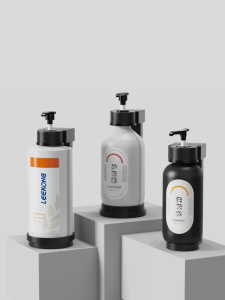
Leekong is committed to providing hotels with high-quality custom solutions in stainless steel and plastic soap dispensers, as well as paper towel dispensers. We help hotels replace single-use consumables with durable assets, building a procurement moat that withstands cost volatility.

Is your hotel ready for the current cost surge? Contact us to learn how durable dispensers can help you achieve long-term cost optimization.
2026 Summer Travel: Value-Driven Shifts

—How the Hotel Industry Can Win in the New Era of “Value-Driven” Competition

Introduction

Nevertheless, the 2026 summer travel market presents a seemingly contradictory yet profoundly significant picture. On one hand, despite persistent inflation, rising living costs, and ongoing geopolitical uncertainties, U.S. summer travel demand remains remarkably resilient. Travelers are not canceling their vacations; instead, they are rethinking how they spend their money. On the other hand, travelers’ spending behavior and decision-making logic have undergone fundamental changes. Nevertheless, they aren’t cutting back on vacations. However, they are completely changing how they choose where to stay and how much to allocate to each trip.

ODM Soap Dispenser Customization: A Complete Guide

Additionally, 49% of Americans plan a leisure trip in three months, showing ongoing holiday travel interest amid the economy. However, compared to earlier this year, travelers are reducing their overall trip frequency and moderating their travel budgets. Consequently, many travelers are consolidating trips into one or two longer, better-planned vacations. As a result, travelers are shifting away from three or four short trips.

Consequently, this shift signals the hospitality sector has entered a new era defined by quality over quantity, experience over price. The era of “build it and they will come” is over. Today, hotels must actively earn every booking by demonstrating clear, tangible value to increasingly discerning guests.

Based on the latest travel consumer research from Hospitality Net, sift, and Allah, we’ve summarized four defining traveler trends that will shape hotel performance this summer season. For hotel procurement decision-makers, brand operators, and suppliers to the hospitality industry — including companies like Leekong that provide custom soap dispensers and paper dispensers — understanding these trends is not just a matter of market intelligence. It is a strategic necessity for adjusting product configuration, optimizing supplier selection, and staying ahead of the competition.

Trend 1: AI-Powered Travel Planning Makes Guests More Rational and Comparison-Driven

Artificial intelligence has evolved from a novelty tool to a mainstream travel-planning instrument, fundamentally reshaping consumer booking behavior. In 2026, 52% of active leisure travelers use artificial intelligence to plan their trips — a 10% year-over-year increase — with ChatGPT and Gemini dominating the traveler toolkit.

What does this mean in practice? A traveler can now ask an AI assistant to “find me a hotel in Chicago with a pool, free breakfast, and guest ratings above 8.5, within a 10-minute walk of the Art Institute, for under $300 per night” — and receive a curated list of options within seconds. The AI can cross-reference reviews, compare pricing across platforms, analyze seasonal rate trends, and even suggest room upgrades based on past travel patterns.

This capability fundamentally changes the balance of power in the booking process. Travelers now enter the decision-making journey with more information, more clarity, and higher expectations than ever before. They are less susceptible to marketing hype and more responsive to verifiable quality indicators. With AI’s ability to compare destinations, hotel value, reviews, and travel experiences in seconds, guests evaluate every option with extreme precision. This means homogeneous hotels — those offering the same amenities as their competitors without any distinguishing features — are far easier to eliminate during customer decision-making.

For hoteliers, the message is clear: mediocrity is no longer an option. Every aspect of the guest experience must be thoughtfully designed and consistently delivered. This includes the often-overlooked details, such as bathroom amenities. A cheap, unreliable soap dispenser that drips or fails to dispense properly is precisely the kind of negative detail that AI-curated reviews will surface and amplify.

Implications for the Hotel Supplies Industry:

Travelers are more “educated” and demand higher quality and attention to detail in every aspect of hotel facilities

Poor-quality or outdated soap dispensers and paper dispensers in restrooms may become triggers for negative reviews — and in the age of AI, those reviews are more visible than ever

High-quality, design-conscious custom bathroom products are becoming a competitive differentiation for hotels on OTA and AI-powered booking platforms

Moreover, hotels investing in premium supplies signal to guests they care about every detail, building trust and loyalty.

Trend 2: Traditional Destination Traffic Dividends Fade; Unique Local Experiences Become the New Core Attraction

Popular conventional travel destinations are losing visitor attention — proof that simple city branding and standardized sightseeing resources are no longer enough to capture modern travelers. Cities that once relied on their global reputation are finding that reputation alone no longer drives bookings. Today’s guests actively seek diverse, niche, and destination-specific experiences that they cannot find anywhere else.

Moreover, local farm-to-table dining, handmade cultural workshops, seasonal exclusive outdoor activities, and community-based cultural festivals have become key booking drivers. Travelers want to eat what locals eat, learn skills from local artisans, and participate in traditions that are authentic to the place they are visiting. They want stories to tell, not just photos to post.

Hotels that rely only on basic room facilities without local characteristic offerings are gradually losing competitiveness in the saturated peak-season market. A hotel room is no longer just a place to sleep — it is a base for exploration, a portal to the destination experience. Guests expect hotels to curate local experiences, provide insider recommendations, and serve as authentic ambassadors for their location.

This trend is particularly pronounced among younger travelers. Indeed, Millennials and Gen Z travelers are driving the demand for “authenticity” in travel. Moreover, they prefer independent, design-led properties that reflect their surroundings over chain hotels. Boutique hotels, lifestyle brands, and econ-lodges are thriving as a result.

Implications for the Hotel Supplies Industry:

Hotels’ thematic and localization transformations are driving demand for customized, design-forward bathroom products that reflect local aesthetics and brand identity

More boutique hotels are choosing custom colors and exclusive finishes for soap dispensers to match their unique spatial design language — a seaside resort might choose ocean-blue ceramic finishes, while a mountain lodge might opt for matte black with wood accents

Suppliers like Leekong, with low-MOO customization services, are built precisely for these differentiation needs. The ability to deliver custom branded soap dispensers with relatively small order quantities enables boutique hotels to achieve premium differentiation without committing to massive inventory

Trend 3: Travel Value Is Redefined — Event-Driven Experiences Beat Low-Price Incentives

Price is no longer the primary factor influencing travel choices. This is a significant departure from previous years, when discounts and promotions often drove booking decisions. In 2026, 55% of travelers prioritize trips tied to special events, festivals, or cultural celebrations. Approximately 29% of visitors are willing to travel for landmark cultural and commemorative events, while 27% plan to attend sports games during their vacation.

What does this mean in practice? Instead of asking where the cheapest destination is, travelers now ask what events they want to join. A Taylor Swift concert, a Formula 1 race, a food and wine festival, or a total solar eclipse can drive bookings far more effectively than a 20% off room rate. Event-linked, immersive, one-of-a-kind experiences have become the most powerful differentiation for hotels and destinations to stand out during peak summer travel.

This trend also reflects a broader shift in consumer values. After years of uncertainty and disruption, travelers are placing higher value on meaningful experiences that create lasting memories. They are willing to pay more for experiences that feel special, unique, and worth talking about.

As a result, for hotels, this means being more intentional about event partnerships and programming. Hotels that align their offerings with local events — whether by creating event-specific packages, hosting pre- or post-event gatherings, or providing convenient transportation to venues — capture a larger share of this motivated travel segment.

Implications for the Hotel Supplies Industry:

During event periods, hotel occupancy surges, imposing higher demands on the durability and reliability of all hotel equipment and supplies

During major events, restroom usage frequency spikes dramatically, making stainless steel soap dispensers and high-capacity paper dispensers essential for maintaining hygiene standards and guest satisfaction

Hotels can extend their “event themes” through brand colors or exclusive branding on custom bathroom products, reinforcing the event atmosphere and creating memorable guest touchpoints

Event-driven hotels often need to scale up quickly and cost-effectively — suppliers offering low-MOO customization and fast turnaround times become valuable partners

Trend 4: Travelers Demand Dual Advantages — Digital Efficiency + Quiet, Private Luxury Stays

Modern guests expect seamless digital convenience as a basic standard, not as a premium upgrade. Mobile self-check-in, pre-arrival personalized room setup, customized travel itineraries, and keyless room entry are no longer differentiators — they are expectations. Guests want technology to work quietly in the background, eliminating friction without introducing complexity. They want to bypass front-desk queues, choose their own rooms, and control their room environment through their smartphones.

At the same time, the “quiet luxury” travel trend continues to grow in popularity. Quiet luxury is about understated elegance — premium materials, thoughtful design, and impeccable service without ostentation. It is the opposite of flashy, Instagram-first design. It is the feeling of being well cared for without being overwhelmed.

Solo travelers, multi-generational families, and wellness-focused guests increasingly favor low-density zones, quiet floors, spa-like bathrooms, and private relaxation areas where they can escape the crowds and recharge. These guests value peace, privacy, and personal space above all else. They are willing to pay a premium for hotels that respect their need for quietude.

The perfect combination of efficient digital services and warm, human-centric private experiences effectively improves guest satisfaction without requiring heavy hardware investment. It is not about choosing between technology and humanity — it is about using technology to enhance human interactions. When guests can handle routine tasks through digital channels, staff are freed to focus on meaningful, personalized service.

Implications for the Hotel Supplies Industry:

The “quiet luxury” concept extends to bathrooms — demand is growing for stainless steel soap dispensers with premium finishes like matte black, brushed gold, gunmetal, and rose gold that convey sophistication without boldness

Sensor-operated, low-noise soap dispensers and paper dispensers align perfectly with the “quiet luxury” experience. They provide touchless hygiene without the mechanical noise that can disturb peaceful environments

High-quality bathroom accessories become detailed proof of a hotel’s “quiet luxury” brand positioning. A well-designed, reliable soap dispenser communicates that the hotel cares about the small things — and if they care about the small things, guests trust they care about the big things too

Hotels catering to the quiet luxury segment are more likely to choose premium materials like 304 stainless steel over plastic, and custom finishes over standard stock designs

Conclusion: The New Rules of Competition for the Hotel Industry

The biggest challenge facing today’s hotel industry is no longer stimulating travel demand — demand is already there. The challenge is winning the intense competition for highly selective travelers who have more information, more choices, and higher expectations than ever before.

As consumer travel expectations continue to upgrade, pure price discounts can no longer drive bookings or build loyalty. The era of competing solely on price is over. Travelers are no longer seeking the cheapest option. Instead, they seek the best value for their money. They define value in increasingly sophisticated ways.

The key to future hotel competition lies in personalized service, authentic local immersion, and tangible guest value. Properties escape the trap of low-price competition and build systematic differentiated experiences. They will capture higher occupancy, better reviews, and sustainable premium revenue that extends beyond the summer peak season.

Hotel supplies suppliers face a clear and urgent direction. They must help hotel clients differentiate themselves in every detail, from restroom soap dispensers to public-area paper dispensers. Guests notice and critique every detail. The quality and design of bathroom products reflect a hotel’s brand. They are no longer a minor afterthought. It is a visible, tangible expression of a hotel’s brand values and quality standards.

Leekong is uniquely positioned to support this shift. Leekong is uniquely positioned to support this shift. We provide dual production in stainless steel and plastic dispensers. This enables hotels to differentiate themselves with premium, custom-designed bathroom products through flexible customization and low MOQs. Our partnerships with Marriott, H World Group, Hunter, and The Guest Supply reflect our commitment to quality and our ability to meet the needs of discerning hospitality clients.


Is your hotel ready for the 2026 summer travel wave? Contact Leekong today to learn how custom bathroom products can enhance your brand’s competitive differentiation and win the loyalty of today’s discerning travelers.