
2026 Summer Travel: Value-Driven Shifts
—How the Hotel Industry Can Win in the New Era of “Value-Driven” Competition
Introduction
Nevertheless, the 2026 summer travel market presents a seemingly contradictory yet profoundly significant picture. On one hand, despite persistent inflation, rising living costs, and ongoing geopolitical uncertainties, U.S. summer travel demand remains remarkably resilient. Travelers are not canceling their vacations; instead, they are rethinking how they spend their money. On the other hand, travelers’ spending behavior and decision-making logic have undergone fundamental changes. Nevertheless, they aren’t cutting back on vacations. However, they are completely changing how they choose where to stay and how much to allocate to each trip.
ODM Soap Dispenser Customization: A Complete Guide
Additionally, 49% of Americans plan a leisure trip in three months, showing ongoing holiday travel interest amid the economy. However, compared to earlier this year, travelers are reducing their overall trip frequency and moderating their travel budgets. Consequently, many travelers are consolidating trips into one or two longer, better-planned vacations. As a result, travelers are shifting away from three or four short trips.
Consequently, this shift signals the hospitality sector has entered a new era defined by quality over quantity, experience over price. The era of “build it and they will come” is over. Today, hotels must actively earn every booking by demonstrating clear, tangible value to increasingly discerning guests.
Based on the latest travel consumer research from Hospitality Net, sift, and Allah, we’ve summarized four defining traveler trends that will shape hotel performance this summer season. For hotel procurement decision-makers, brand operators, and suppliers to the hospitality industry — including companies like Leekong that provide custom soap dispensers and paper dispensers — understanding these trends is not just a matter of market intelligence. It is a strategic necessity for adjusting product configuration, optimizing supplier selection, and staying ahead of the competition.
Trend 1: AI-Powered Travel Planning Makes Guests More Rational and Comparison-Driven
Artificial intelligence has evolved from a novelty tool to a mainstream travel-planning instrument, fundamentally reshaping consumer booking behavior. In 2026, 52% of active leisure travelers use artificial intelligence to plan their trips — a 10% year-over-year increase — with ChatGPT and Gemini dominating the traveler toolkit.
What does this mean in practice? A traveler can now ask an AI assistant to “find me a hotel in Chicago with a pool, free breakfast, and guest ratings above 8.5, within a 10-minute walk of the Art Institute, for under $300 per night” — and receive a curated list of options within seconds. The AI can cross-reference reviews, compare pricing across platforms, analyze seasonal rate trends, and even suggest room upgrades based on past travel patterns.
This capability fundamentally changes the balance of power in the booking process. Travelers now enter the decision-making journey with more information, more clarity, and higher expectations than ever before. They are less susceptible to marketing hype and more responsive to verifiable quality indicators. With AI’s ability to compare destinations, hotel value, reviews, and travel experiences in seconds, guests evaluate every option with extreme precision. This means homogeneous hotels — those offering the same amenities as their competitors without any distinguishing features — are far easier to eliminate during customer decision-making.
For hoteliers, the message is clear: mediocrity is no longer an option. Every aspect of the guest experience must be thoughtfully designed and consistently delivered. This includes the often-overlooked details, such as bathroom amenities. A cheap, unreliable soap dispenser that drips or fails to dispense properly is precisely the kind of negative detail that AI-curated reviews will surface and amplify.
Implications for the Hotel Supplies Industry:
Travelers are more “educated” and demand higher quality and attention to detail in every aspect of hotel facilities
Poor-quality or outdated soap dispensers and paper dispensers in restrooms may become triggers for negative reviews — and in the age of AI, those reviews are more visible than ever
High-quality, design-conscious custom bathroom products are becoming a competitive differentiation for hotels on OTA and AI-powered booking platforms
Moreover, hotels investing in premium supplies signal to guests they care about every detail, building trust and loyalty.
Trend 2: Traditional Destination Traffic Dividends Fade; Unique Local Experiences Become the New Core Attraction
Popular conventional travel destinations are losing visitor attention — proof that simple city branding and standardized sightseeing resources are no longer enough to capture modern travelers. Cities that once relied on their global reputation are finding that reputation alone no longer drives bookings. Today’s guests actively seek diverse, niche, and destination-specific experiences that they cannot find anywhere else.
Moreover, local farm-to-table dining, handmade cultural workshops, seasonal exclusive outdoor activities, and community-based cultural festivals have become key booking drivers. Travelers want to eat what locals eat, learn skills from local artisans, and participate in traditions that are authentic to the place they are visiting. They want stories to tell, not just photos to post.
Hotels that rely only on basic room facilities without local characteristic offerings are gradually losing competitiveness in the saturated peak-season market. A hotel room is no longer just a place to sleep — it is a base for exploration, a portal to the destination experience. Guests expect hotels to curate local experiences, provide insider recommendations, and serve as authentic ambassadors for their location.
This trend is particularly pronounced among younger travelers. Indeed, Millennials and Gen Z travelers are driving the demand for “authenticity” in travel. Moreover, they prefer independent, design-led properties that reflect their surroundings over chain hotels. Boutique hotels, lifestyle brands, and econ-lodges are thriving as a result.
Implications for the Hotel Supplies Industry:
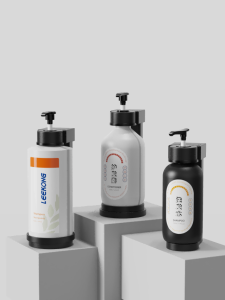
Hotels’ thematic and localization transformations are driving demand for customized, design-forward bathroom products that reflect local aesthetics and brand identity
More boutique hotels are choosing custom colors and exclusive finishes for soap dispensers to match their unique spatial design language — a seaside resort might choose ocean-blue ceramic finishes, while a mountain lodge might opt for matte black with wood accents
Suppliers like Leekong, with low-MOO customization services, are built precisely for these differentiation needs. The ability to deliver custom branded soap dispensers with relatively small order quantities enables boutique hotels to achieve premium differentiation without committing to massive inventory
Trend 3: Travel Value Is Redefined — Event-Driven Experiences Beat Low-Price Incentives
Price is no longer the primary factor influencing travel choices. This is a significant departure from previous years, when discounts and promotions often drove booking decisions. In 2026, 55% of travelers prioritize trips tied to special events, festivals, or cultural celebrations. Approximately 29% of visitors are willing to travel for landmark cultural and commemorative events, while 27% plan to attend sports games during their vacation.
What does this mean in practice? Instead of asking where the cheapest destination is, travelers now ask what events they want to join. A Taylor Swift concert, a Formula 1 race, a food and wine festival, or a total solar eclipse can drive bookings far more effectively than a 20% off room rate. Event-linked, immersive, one-of-a-kind experiences have become the most powerful differentiation for hotels and destinations to stand out during peak summer travel.
This trend also reflects a broader shift in consumer values. After years of uncertainty and disruption, travelers are placing higher value on meaningful experiences that create lasting memories. They are willing to pay more for experiences that feel special, unique, and worth talking about.
As a result, for hotels, this means being more intentional about event partnerships and programming. Hotels that align their offerings with local events — whether by creating event-specific packages, hosting pre- or post-event gatherings, or providing convenient transportation to venues — capture a larger share of this motivated travel segment.
Implications for the Hotel Supplies Industry:
During event periods, hotel occupancy surges, imposing higher demands on the durability and reliability of all hotel equipment and supplies
During major events, restroom usage frequency spikes dramatically, making stainless steel soap dispensers and high-capacity paper dispensers essential for maintaining hygiene standards and guest satisfaction
Hotels can extend their “event themes” through brand colors or exclusive branding on custom bathroom products, reinforcing the event atmosphere and creating memorable guest touchpoints
Event-driven hotels often need to scale up quickly and cost-effectively — suppliers offering low-MOO customization and fast turnaround times become valuable partners
Trend 4: Travelers Demand Dual Advantages — Digital Efficiency + Quiet, Private Luxury Stays
Modern guests expect seamless digital convenience as a basic standard, not as a premium upgrade. Mobile self-check-in, pre-arrival personalized room setup, customized travel itineraries, and keyless room entry are no longer differentiators — they are expectations. Guests want technology to work quietly in the background, eliminating friction without introducing complexity. They want to bypass front-desk queues, choose their own rooms, and control their room environment through their smartphones.
At the same time, the “quiet luxury” travel trend continues to grow in popularity. Quiet luxury is about understated elegance — premium materials, thoughtful design, and impeccable service without ostentation. It is the opposite of flashy, Instagram-first design. It is the feeling of being well cared for without being overwhelmed.
Solo travelers, multi-generational families, and wellness-focused guests increasingly favor low-density zones, quiet floors, spa-like bathrooms, and private relaxation areas where they can escape the crowds and recharge. These guests value peace, privacy, and personal space above all else. They are willing to pay a premium for hotels that respect their need for quietude.
The perfect combination of efficient digital services and warm, human-centric private experiences effectively improves guest satisfaction without requiring heavy hardware investment. It is not about choosing between technology and humanity — it is about using technology to enhance human interactions. When guests can handle routine tasks through digital channels, staff are freed to focus on meaningful, personalized service.
Implications for the Hotel Supplies Industry:
The “quiet luxury” concept extends to bathrooms — demand is growing for stainless steel soap dispensers with premium finishes like matte black, brushed gold, gunmetal, and rose gold that convey sophistication without boldness
Sensor-operated, low-noise soap dispensers and paper dispensers align perfectly with the “quiet luxury” experience. They provide touchless hygiene without the mechanical noise that can disturb peaceful environments
High-quality bathroom accessories become detailed proof of a hotel’s “quiet luxury” brand positioning. A well-designed, reliable soap dispenser communicates that the hotel cares about the small things — and if they care about the small things, guests trust they care about the big things too
Hotels catering to the quiet luxury segment are more likely to choose premium materials like 304 stainless steel over plastic, and custom finishes over standard stock designs
Conclusion: The New Rules of Competition for the Hotel Industry
The biggest challenge facing today’s hotel industry is no longer stimulating travel demand — demand is already there. The challenge is winning the intense competition for highly selective travelers who have more information, more choices, and higher expectations than ever before.
As consumer travel expectations continue to upgrade, pure price discounts can no longer drive bookings or build loyalty. The era of competing solely on price is over. Travelers are no longer seeking the cheapest option. Instead, they seek the best value for their money. They define value in increasingly sophisticated ways.
The key to future hotel competition lies in personalized service, authentic local immersion, and tangible guest value. Properties escape the trap of low-price competition and build systematic differentiated experiences. They will capture higher occupancy, better reviews, and sustainable premium revenue that extends beyond the summer peak season.
Hotel supplies suppliers face a clear and urgent direction. They must help hotel clients differentiate themselves in every detail, from restroom soap dispensers to public-area paper dispensers. Guests notice and critique every detail. The quality and design of bathroom products reflect a hotel’s brand. They are no longer a minor afterthought. It is a visible, tangible expression of a hotel’s brand values and quality standards.
Leekong is uniquely positioned to support this shift. Leekong is uniquely positioned to support this shift. We provide dual production in stainless steel and plastic dispensers. This enables hotels to differentiate themselves with premium, custom-designed bathroom products through flexible customization and low MOQs. Our partnerships with Marriott, H World Group, Hunter, and The Guest Supply reflect our commitment to quality and our ability to meet the needs of discerning hospitality clients.
Is your hotel ready for the 2026 summer travel wave? Contact Leekong today to learn how custom bathroom products can enhance your brand’s competitive differentiation and win the loyalty of today’s discerning travelers.